

So, how did that go then…?#
OK, let’s cut straight to the chase - DickOfAxe won, with 60 points and a city builder that went from a grid and a snapping cursor to families, buildings and a working UI in four weeks. Congratulations! The prize, as advertised, is bragging rights and absolutely nothing else.
But the points were only ever a nudge. The real point of the month was steady progress, shared often, and on that score I think we all did rather well. Six of us started something, everyone posted along the way, and the threads filled up with screenshots, sound effects, assembly listings and some genuinely useful back and forth.
Final standings#
| # | Player | Points | Badges | Wk 4 |
|---|---|---|---|---|
| 🥇 | DickOfAxe Ancient Greek city builder | 7 | – | |
| 🥈 | click Sigas Alpha | 7 | – | |
| 🥈 | Lintford Amiga Tetris (68000 assembly) | 7 | – | |
| 4 | VeraShackle Gremlin & Buccaneer | 4 | – | |
| 5 | Commander Coder The Retro Puzzle Box (virtual edition) | 4 | +10 | |
| 6 | Alfie Minesweeper on a Cheap Yellow Display | 3 | – |
A confession from the referee: I never got round to scoring week 4, so these are the scores from the last scoreboard (end of week 3), plus a Bug Hunter that I’d already promised. Nobody was going to catch DickOfAxe anyway… probably.
What everyone made#
🪓 DickOfAxe - Ancient Greek city builder#
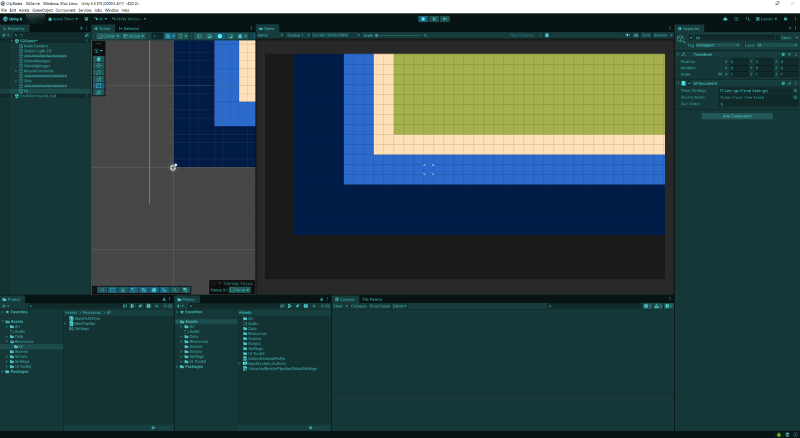
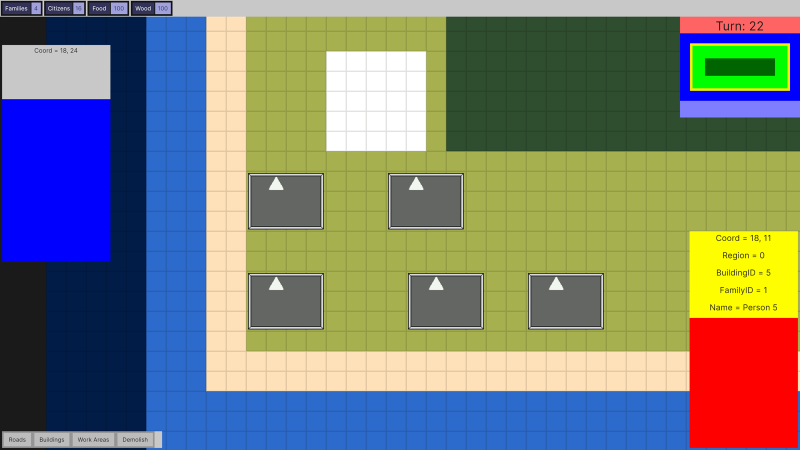
“A new year, a new city builder.” The plan was a survival city builder set around an ancient Greek island, with an economy that doesn’t force the same production chain every game, and deliberately not a simulation - nobody wants to watch citizens spend a quarter of the year walking to the storeroom. Over the month it grew a generic grid, camera controls, a UI built in code with Unity’s UI Toolkit, building placement with validity checks, home-made 8-bit sound effects, and pops, families and regions underneath it all. Steady, visible progress every week, which is exactly what the points were meant to reward.
🖱️ click - Sigas Alpha#
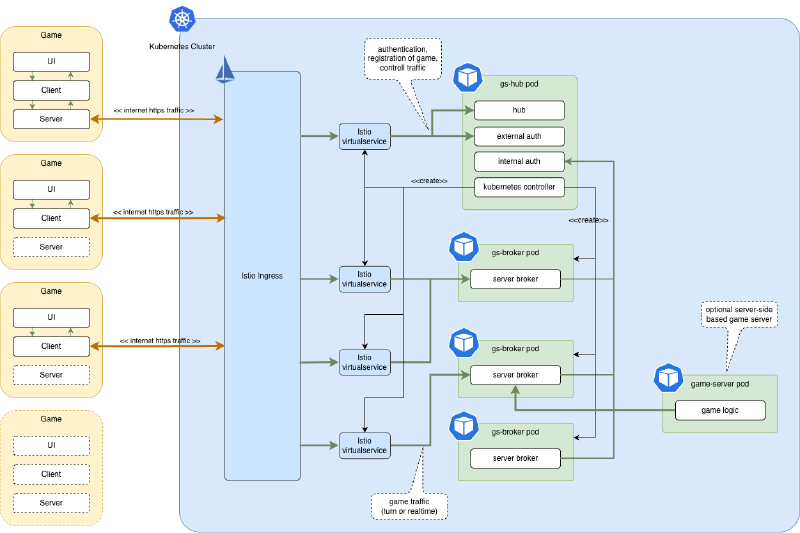
The most ambitious foundations of the month: a multiplayer game server written from scratch, with an architecture diagram on day one. By the end there was a Java NIO broker passing chunked-encoded message streams between players, a Flask hub for creating and joining games, a Python client library, and a hand-written JSON lexer and parser (because, why not?). The card game it’s all for is still to come, but the plumbing is in.
🥒 Lintford - Amiga Tetris#
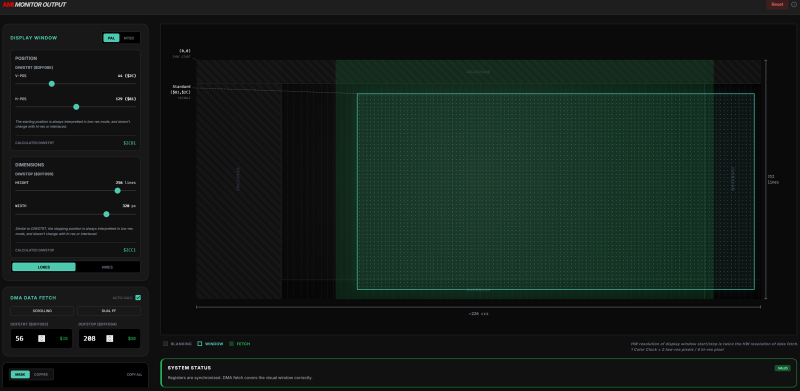
Tetris, on an Amiga 500 spec, in 68000 assembly. Lintford started with a reusable AmigaBase of common routines, built an interactive display-window visualiser along the way (admittedly overkill, but very slick), then worked through game states as jump tables, tetromino masks, blitter-based collisions and - after days of wrestling the blitter in descending mode - line clearing. The posts explaining the code were some of the best reading of the month.
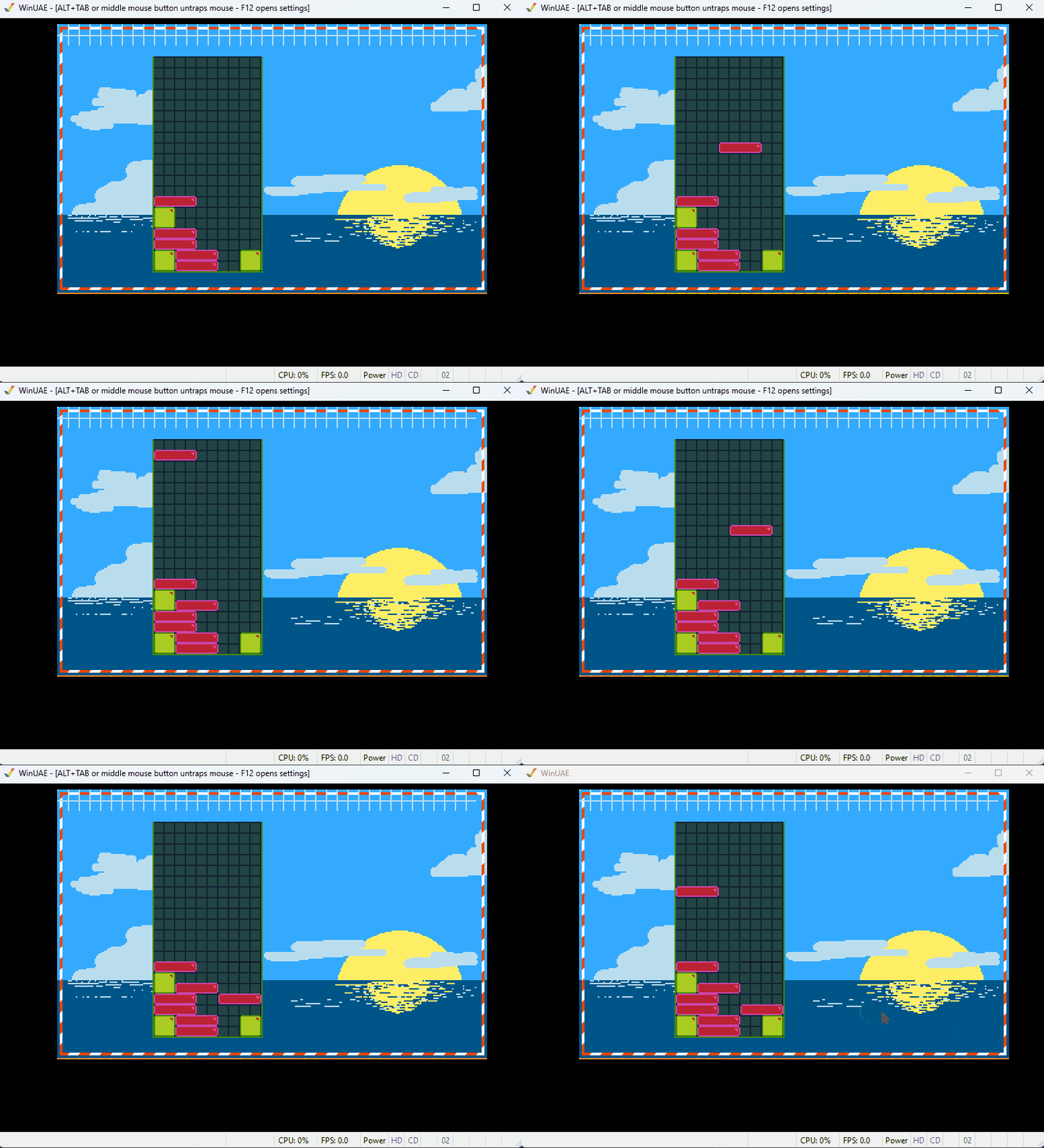
Week 3: blocks spawning, moving and stacking in the well.
🐒 VeraShackle - Gremlin & Buccaneer#
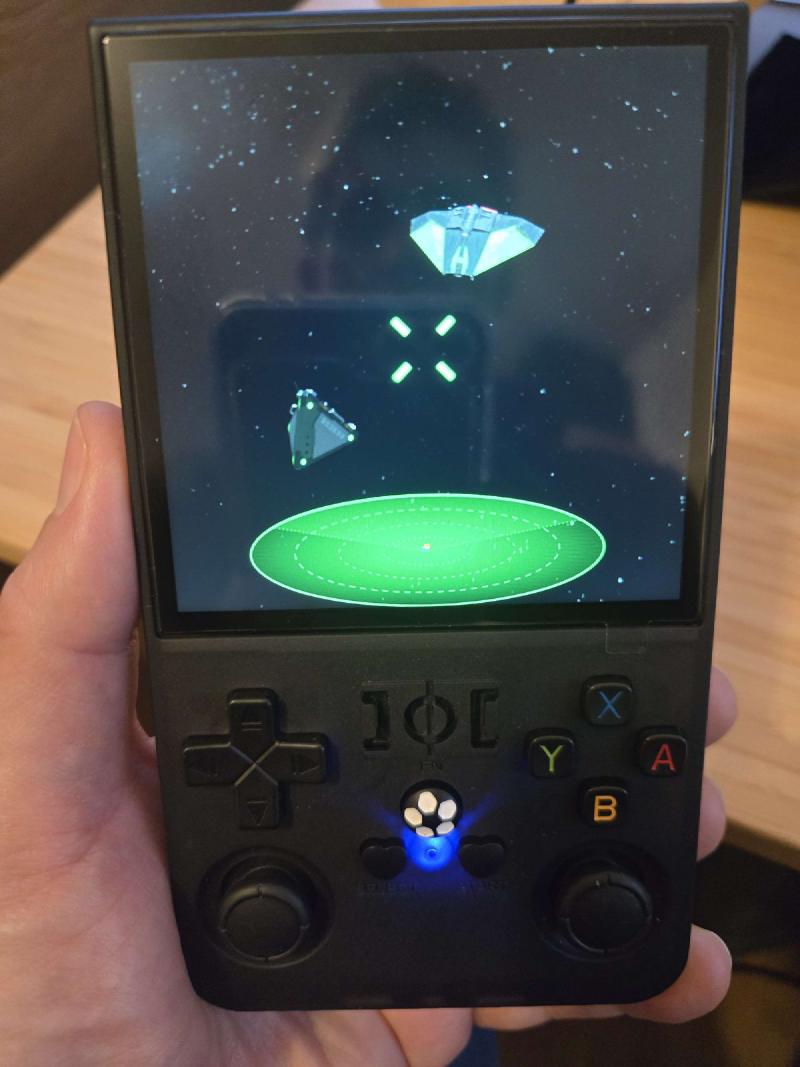
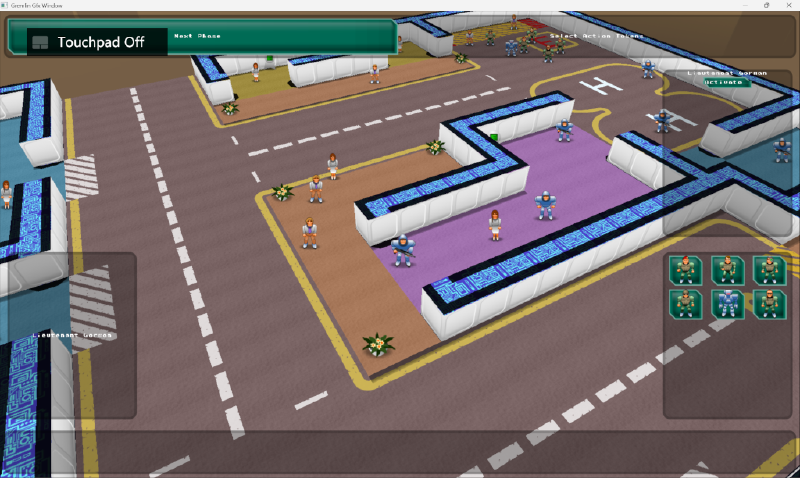
Me. I started with a long-overdue untangling of Gremlin into proper layers, which (with some help from click) turned into a much bigger refactor than planned. Then flight physics came back to Buccaneer, a frame-spike profiler found some wasteful GPU uploads, an asset management system appeared out of a simple wish to share a sprite sheet, and a new UI toolkit finally got used in anger. The month ended with ECS-driven particles and spaceships doing nearly the right thing. Very little of it was what I planned on day one - which, if you’ve read my other posts, will surprise no-one.
🫡 Commander Coder - The Retro Puzzle Box#
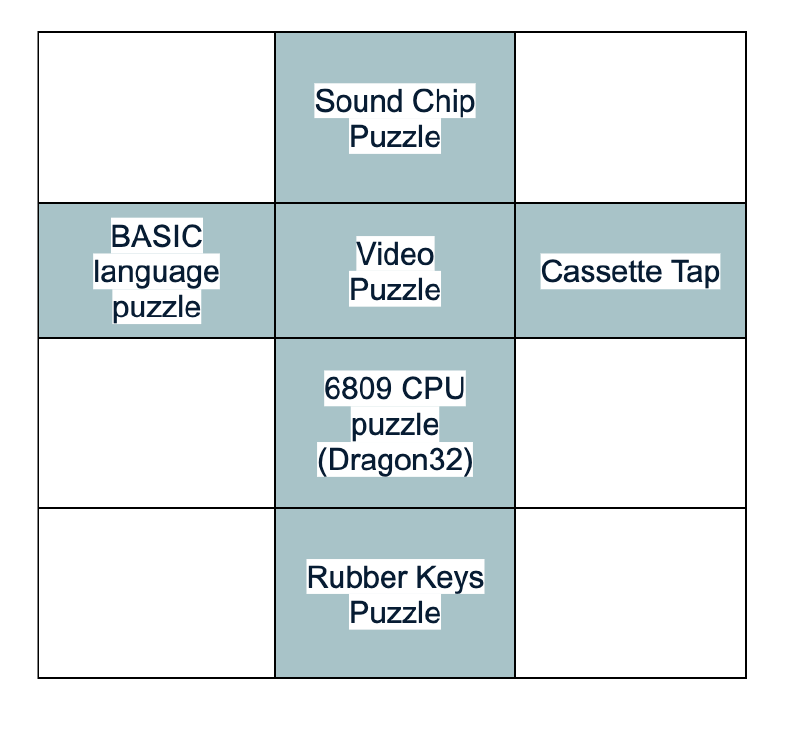
A virtual puzzle box with a 1980s home computer theme on each of its six faces - rubber keys, cassettes, BASIC, pixel graphics, SID chip music and a 6809 CPU - built in Godot, with a view to a real ESP32-powered box one day. The puzzles for every face got designed, there were experiments with trackers for the music, and a sliding peg-in-a-maze mechanism that nearly behaved. Possibly the best idea of the month, and one I’d really like to see finished.
🤓 Alfie - Minesweeper on a Cheap Yellow Display#
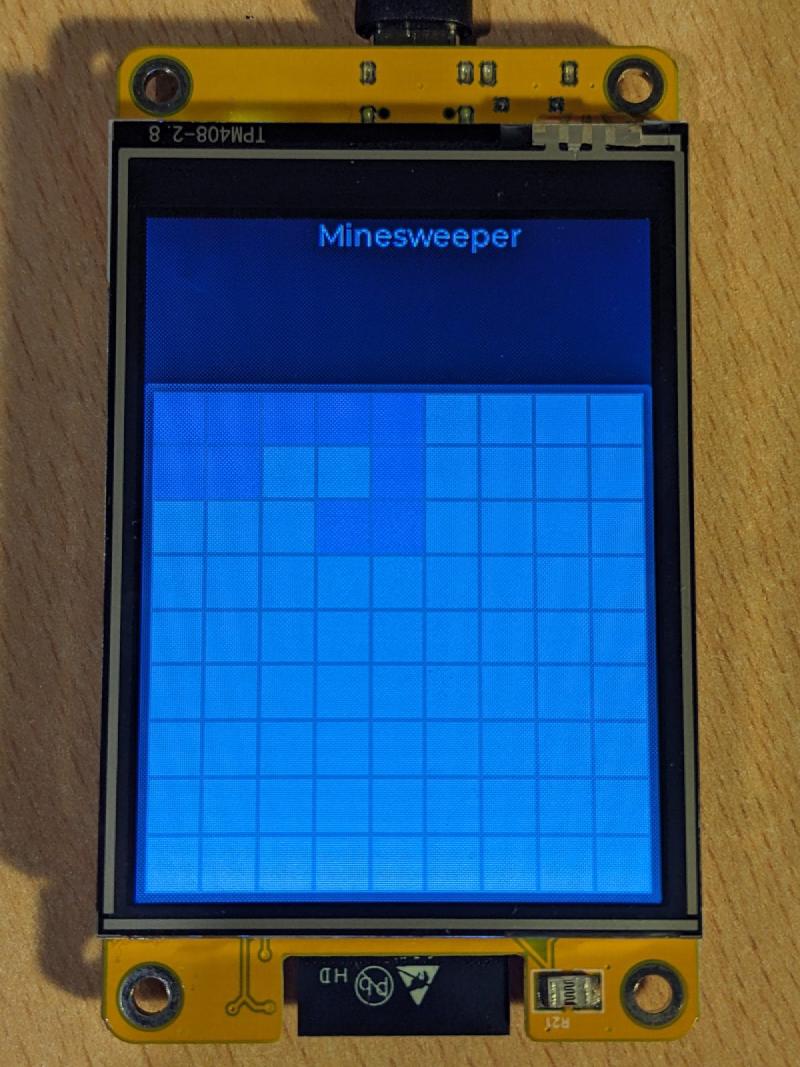
Alfie joined late, with a Cheap Yellow Display (an ESP32 with a touchscreen) bought without a purpose. In ten days that became a C project with PlatformIO and LVGL, touch input sorted out (rotation included), and a 9x9 grid that can tell a press from a long press. It ended in what Alfie called a ‘dead end’ with LVGL’s button styling, but really that’s a design blind alley found and crossed off - which is progress too.
The weekly twists#
Each Monday brought an optional 10-point twist:
- Week 1 - Make Some Noise: an audio asset of your own creation. DickOfAxe stitched together 8-bit samples into building and demolish sounds. Commander Coder and I collected too.
- Week 2 - Juice Budget: three small feedback improvements. No takers - probably a bit early in everyone’s projects.
- Week 3 - One Value, Many Effects: one variable driving several systems.
- Week 4 - Bling it up: a before and after of an upgraded art asset.
Week 1’s twist was claimed three times and the rest not at all, which tells me something about timing - twists work better when they fit where people’s projects naturally are.
What I’d change#
- Score every week, including the last one. The final week deserves a final scoreboard, not a referee on a school night.
- Keep the scores in public. The scoring lived in my spreadsheet, and only the weekly totals made it to Discord. Claims should be visible as they happen, not just once a week.
- Notifications for threads were a pain. Some of us only kept up by posting in every thread!
- Earlier achievements for ‘plumbing’ projects. A few of us spent the whole month on foundations, and the list favoured visible game progress. Fair enough for a game jam, but worth balancing.
Thanks everyone - it was a lot of fun.